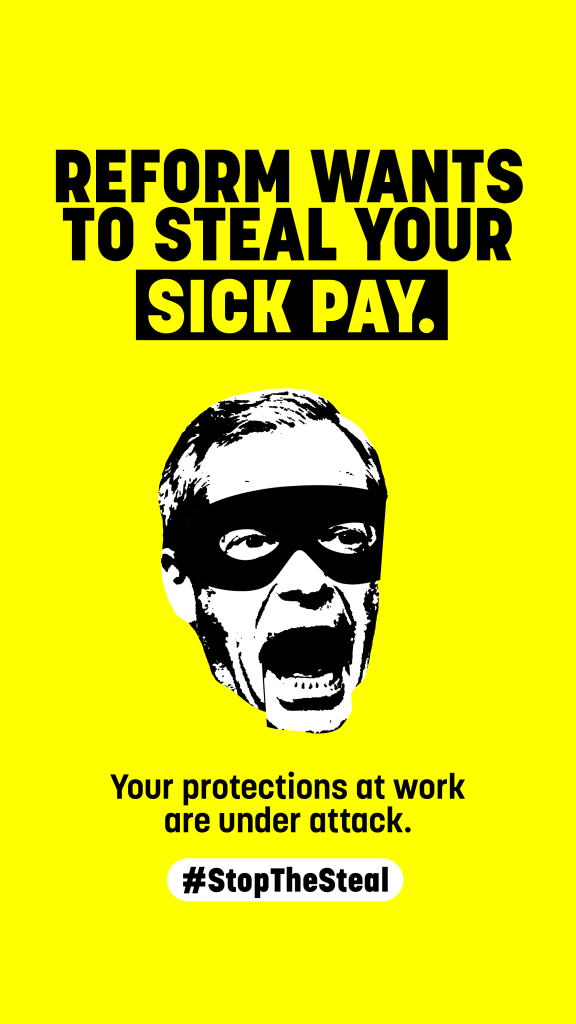

If you are reading this, you likely already know the value of a union card in your pocket. You know the peace of mind that comes with collective protection. But as the TUC’s Stop the Steal campaign highlights, our rights are only as strong as our numbers.
The “theft” of our rights doesn’t just happen in boardrooms; it happens when we let our friends, children, and neighbours navigate the modern workplace alone.
Lessons from History: Lest We Forget
It is easy to think of “bad bosses” as a modern phenomenon, but history shows us exactly what happens when employers are left to their own devices without a collective counterweight. We don’t have to look far back to see the “horrendous” become the “standard.”
-
The Matchgirls’ Strike (1888): At the Bryant & May factory, women worked fourteen-hour days for pittance, but the real horror was “phossy jaw.” The phosphorus used in matches caused their teeth to fall out and their jawbones to literally glow in the dark and rot away. Management knew the risks but chose profit over the physical survival of their staff.
-
The Triangle Shirtwaist Factory (1911): In one of the most infamous examples of corporate negligence, 146 workers died in a fire because the owners had locked the exit doors to prevent them from taking unauthorised breaks or stealing scraps of cloth. Many were forced to jump from the ninth floor.
-
The “Company Store” System: Throughout the industrial revolution, many bosses didn’t pay in cash; they paid in “scrip”—tokens that could only be spent at the company-owned shop. This effectively turned employees into indentured servants, perpetually in debt to the person they worked for.
The Modern “Steal“
Today, the horrors look different. They look like “algorithmic management” that fires a delivery driver via an app without a human conversation. They look like “fire and rehire” schemes that strip decades of seniority away in a single afternoon.
The tactics have changed, but the goal is the same: to isolate the worker and maximise the profit.
Your Mission: The Conversation
We cannot expect the unorganised to find their way to a union alone. They are often told unions are “outdated” or “too expensive.” As a member, you are the living proof that those are lies.
Next time you’re with family or friends, ask them:
-
“Who has your back if things go wrong?” Most people realise they are one “bad day” with a manager away from disaster.
-
“When was your last real pay rise?” Compare the power of your collective bargaining to their individual “negotiation.”
-
“Do you know you can join?” Many people in the gig economy or retail sectors don’t even realise there is a union for them.
Conclusion: Solidarity is a Family Value
Our ancestors fought, bled, and organised so that we wouldn’t have to suffer “phossy jaw” or locked exit doors. We owe it to the next generation to ensure they don’t enter a workforce where those old shadows return under new names.
Don’t just be a member. Be an organiser. Talk to your family. Talk to your friends. Tell them to join a union.